
Equity benchmark indices ended flat on Wednesday with Sensex sliding 33 points and Nifty gaining 9 points after an unabated record-breaking rally in the last few trading sessions. Weak global market trends and fall in HDFC twins also spoiled markets party. The 30-share BSE Sensex dipped 33.01 points or 0.05 per cent to settle at 65,446.04.

The key risk factors would be anti-incumbency, small vote share swings causing large impact on outcomes and the 2004 example.

The developed world's recovery, particularly that of the US, is not necessarily a positive for the Indian market.

Hindustan Unilever's Q3FY24 performance was lacklustre, with both sales and operating profit barely moving from the year-ago period due to price cuts and higher advertising costs. Besides weak demand, the FMCG (fast-moving consumer goods) major is facing increased competitive pressures, particularly from regional players, which, coupled with a slow recovery in rural markets, could put revenues under pressure going forward. Margins are expected to remain range-bound as benefits from falling raw material costs are expected to be neutralised by rising promotional budgets.

The second-quarter performance of the top five information-technology services firms gives the hint that slow growth has bottomed out on the back of discretionary spending kicking in for the sector's largest vertical - the banking and financial services. However, concern about the macro-environment continues to be a challenge. Among the top four - Tata Consultancy Services (TCS), Infosys, HCLTech, and Wipro - it is Bengaluru-based Infosys that has performed the best and that was evident in its full-year revenue guidance.

Benchmark Sensex bounced back from early lows and closed higher by nearly 376 points on Monday, snapping its four-day losing run following a rally in blue-chips ICICI Bank, HUL and HDFC Bank. The 30-share BSE Sensex rebounded 375.61 points or 0.46 per cent to settle at 81,559.54. The index opened lower and hit a low of 80,895.05 points in early trade.

Investors are showing some interest in the downstream energy cycle. Refiners and marketers, especially the public sector (PSU) oil marketing companies (OMCs) could see a revival of marketing margins. Lower crude oil and gas prices may also improve margins in industries like paints, logistics, synthetic fabrics, plastics, and fertilisers. In the medium-term, however, there could be a supply overhang affecting OMCs as new refining capacities are scheduled to be commissioned, especially in China, and this may lead to a drop in the refining margins as capacity would be surplus to demand until and unless there's a pick-up in global growth.

Jailed journalist Mahesh Langa, already facing multiple charges, has been booked in a fresh case for allegedly extorting Rs 40 lakh from a real estate agent by threatening to malign his image and implicate him in a false case. This is the fifth FIR registered against him since his arrest in October 2023 for an alleged Goods and Services Tax (GST) scam. The latest case was registered based on a complaint by Janak Thakor, a real estate agent, who alleged that Langa threatened to write negative articles about him and trap him in a false case unless he paid the money. Langa has been in jail since his arrest in October and is facing charges in four previous cases registered by Ahmedabad, Gandhinagar, and Rajkot police.

Since November 2022, sectoral, midcap, and smallcap funds have collectively added nearly 39 million folios, which is 65 per cent of the total additions to equity funds over the past two years.

'Our advice is to put money into equities now rather than staying away.'

The objective is to ensure the exchange's preparedness in the event of a natural calamity, so that any disruptions should not affect market integrity and investor confidence.

Stock markets would be largely driven by macroeconomic data, auto sales numbers, FII inflows and global trends this week, analysts said. The US debt ceiling negotiations and institutional flows will also be watched by investors. "This week, market participants will closely monitor institutional flows, as there is a historical observation that when both FIIs and DIIs become net buyers simultaneously, there is a likelihood of some profit-booking in the market," said Santosh Meena, head of research, Swastika Investmart Ltd.

Out of 3,871 recovery certificates issued by the regulator in various cases, 807 have been certified as difficult to recover.

India, the world's third-largest energy consumer and importer, on Wednesday warned of high oil prices hurting the nascent and fragile global economic recovery and floated an idea of long-term supply contracts that provide predictable and stable pricing. Speaking at the India Energy Forum by CERAWeek, Oil Minister Hardeep Singh Puri said there was a mismatch between demand for oil and the supplies producers such as OPEC+ were making and there was a case for raising the production. The world, he said, needs "predictable, stable and affordable" prices for it to recover back to pre-pandemic levels.

'With a very stable technology with limited functionalities, a large network has spanned out.'

From the Sensex pack, State Bank of India, Axis Bank, IndusInd Bank, Tech Mahindra, HCL Technologies, Tata Consultancy Services, Maruti Suzuki, Tata Steel and Tata Motors were the major gainers. Power Grid and HDFC Bank were the laggards from the pack.

India has recorded the second-highest increase in domestic airfares in the Asia-Pacific (APAC) and West Asian regions, climbing by 43 per cent in the first half of 2024 compared to pre-pandemic levels in 2019, second only to Vietnam (63 per cent). India ranks third in fare increases during the same period in international skies, behind the United Arab Emirates (UAE) and Malaysia. The airfare study conducted by Airports Council International (ACI), which represents 617 airports in this region, was done in partnership with Flare Aviation Consulting.

Steel maker JSW Steel's Q3 results, announced on January 24, 2025, after market hours, failed to meet Street expectations. The company reported a consolidated net profit attributable to the owners of Rs 717 crore in Q3FY25, reflecting a 70.3 per cent decline Y-o-Y, compared to Rs 2,415 crore in Q3FY24.

The stock of online classified major Info Edge (India) was up over 6 per cent on Friday on expectations of demand improvement for Indian IT companies. Strong revenue growth prospects for each of its online verticals - including recruitment, matrimony, real estate, education, and upside from its holdings in companies such as Zomato - had prompted Goldman Sachs to upgrade the stock. Info Edge's standalone revenue grew 10.6 per cent year on year (Y-o-Y) in Q2FY25, beating consensus. 99acres (+16.9 per cent Y-o-Y) and Jeevansathi (+33 per cent Y-o-Y) were drivers of growth while recruitment grew 8.5 per cent Y-o-Y.

Although UltraTech Cement's results for the December quarter of the current financial year (Q3FY25) were not an improvement compared to Q3FY24, the company managed to surpass Street expectations. The company's profit attributable to the owners of the parent dropped 17.4 per cent year-on-year (Y-o-Y) to Rs 1,469.5 crore in Q3FY25 as against Rs 1,777 crore in Q3FY24.

The answer to that depends on whether the globe is able to contain the virus spread, says Samie Modak.

The Indian IT services industry is expected to clock revenue growth in the mid-single digit for the financial year 2024-2025 (FY25), according to a report by Icra for the year.
Though the Satyam episode was shocking, the markets will move on, placing greater premium on good managements and governance and punishing companies that don't inspire confidence

10 largecaps stocks which stand to gain from the Budget.

Macroeconomic data announcement, Omicron situation and global trends will be the major driving factors for the equity market in the first week of the new year 2022, according to analysts. In what turned out to be a historic year, the Indian stock indices went past multiple milestones and the 30-share Sensex made an annual gain of 10,502.49 points or 21.99 per cent in 2021. Religare Broking Vice-President (Research) Ajit Mishra said, "This week marks the beginning of a new month and participants will be closely eyeing some crucial high-frequency data like monthly auto sales, India manufacturing PMI and India services PMI. "Besides, updates on the COVID-19 situation and performance of global markets will also be critical."
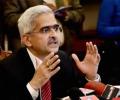
Amid prolonged uncertainty, continued policy support will be crucial for sustained economic recovery from the coronavirus pandemic, Reserve Bank Governor Shaktikanta Das said at the recent meeting of the Monetary Policy Committee. "In this period of prolonged uncertainty, it would be wise to remain agile and respond in a gradual, calibrated and well telegraphed manner to the emerging challenges," opined Das, according to the minutes of the MPC meeting released by the Reserve Bank on Thursday. Observing that economic recovery from the pandemic remains incomplete and uneven, he said, "continued support from various policies remains crucial for a sustained recovery." The governor said the renewed surge in international crude oil prices, however, requires close monitoring.

However, the market recovery is still slow and European market is still volatile showing its effect on emerging markets including India, said Jose Eduardo Coastas, senior vice president (market intelligence).

Most market analysts are expecting the momentum to shift towards 'quality' and 'growth' stocks in 2024 after the outperformance of 'value' stocks over the past three years. 'Value' stocks are generally well-established companies with steady profits that are trading at a discount to what they are intrinsically worth. Companies in sectors such as commodities, industrials, commercial vehicles and public sector units (PSUs) fall in this bracket.

Shares of Bajaj Finance surged over 6 per cent on Thursday after the diversified non-banking finance company reported an 18 per cent increase in consolidated net profit to Rs 4,308 crore for the December quarter. The stock rallied 6.33 per cent intraday to touch Rs 8,249.95 - a 52-week high -- on the BSE.

While this will incur a revenue loss amounting to 0.2 per cent of GDP, it will provide a strong boost to consumer sentiment and spending, points out Rajani Sinha.

India's fast-moving consumer goods (FMCG) sector grew 5.7 per cent by value and 4.1 per cent by volume in the July-September quarter driven by rural demand, consumer intelligence firm NielsenIQ said in its quarterly update on Thursday. Price-led growth stood at 1.5 per cent. According to NielsenIQ data, rural volume growth outpaced urban markets for the third straight quarter despite consumption softening in both regions.
From the Sensex pack, Adani Ports & Special Economic Zones, Mahindra & Mahindra, Reliance Industries, HDFC Bank, Larsen & Toubro, NTPC, State Bank of India, UltraTech Cement and Kotak Mahindra Bank were the major gainers. In contrast, Tata Steel, Titan, Bajaj Finserv, JSW Steel, Bajaj Finance, Hindustan Unilever, ITC, Tata Motors and Tata Consultancy Services were among the laggards.

As Indians start travelling in the new normal, strong recovery in smaller towns underscores success for ride-hailing giant's 'India to Bharat' strategy, which offers new products in regional markets.

Ask rediffGURU and PF and MF expert Janak Patel your mutual fund and personal finance-related questions.

From 30 Sensex firms, Adani Ports, NTPC, Power Grid, State Bank of India, Nestle, Mahindra & Mahindra, Reliance Industries and Tata Consultancy Services were the biggest laggards. Axis Bank, Infosys, JSW Steel, Tata Motors, HDFC Bank and Kotak Mahindra Bank were among the gainers from the blue-chip pack.

'Retail investors, who had not seen such a massive correction in the SMID universe since COVID-19, are witnessing something like this for the first time. Panic profit booking may continue.'

The October-December quarter (Q3FY25) results of fast moving consumer goods (FMCG) major Hindustan Unilever (HUL) indicated weak demand, with urban growth muted and rural showing recovery. Consolidated revenue grew by 1.6 per cent (volume was flat) to Rs 15,818 crore, due to price hikes. Prices of key raw materials such as palm oil and tea remained elevated, leading to compression of gross margin.

Even as the returns of mutual fund (MF) schemes have improved considerably in the past three months, addition of new investors has remained in the slow lane for the MF industry. According to industry data, during the first six months of CY 2023, MFs onboarded only 1.6 million new unique investors, in stark contrast to the 4.7 million investors added during the same period last CY and the 2.4 million in 2021. It is noteworthy, however, that the current additions for this year have doubled in comparison to the figure of 800,000 seen in 2020.

Lower crude oil costs and higher marketing margins are expected to raise the fortunes of oil marketing companies (OMCs) in the first quarter (Q1) of 2023-24 (FY24), while city gas distribution (CGD) companies could also benefit from lower spot prices of liquefied natural gas (LNG). However, in a break from the past, growth trends are expected to diverge for various segments within the broad energy sector. Analysts expect the earnings from gas production to go down for upstream national oil and gas companies such as Oil and Natural Gas Corporation (ONGC) and Oil India (OIL) due to the introduction of the new domestic gas pricing regime on April 1. After showing steep losses over the first half of 2022-23 (FY23), the marketing margins of OMCs have steadily recovered in four months.

Brokerages on DMart Q3 results: Avenue Supermarts (DMart) shares slipped as much as 5.74 per cent to hit an intraday low of Rs 3,474 per share on Monday. However, the stock recovered slightly to close at Rs 3,507.95, down 4.82 per cent. Notably, the 52-week low for DMart shares is Rs 3,400. The downward movement in DMart's share price was triggered by the company's 2024-25 (FY25) October-December quarter (Q3) results, which missed Street expectations.
